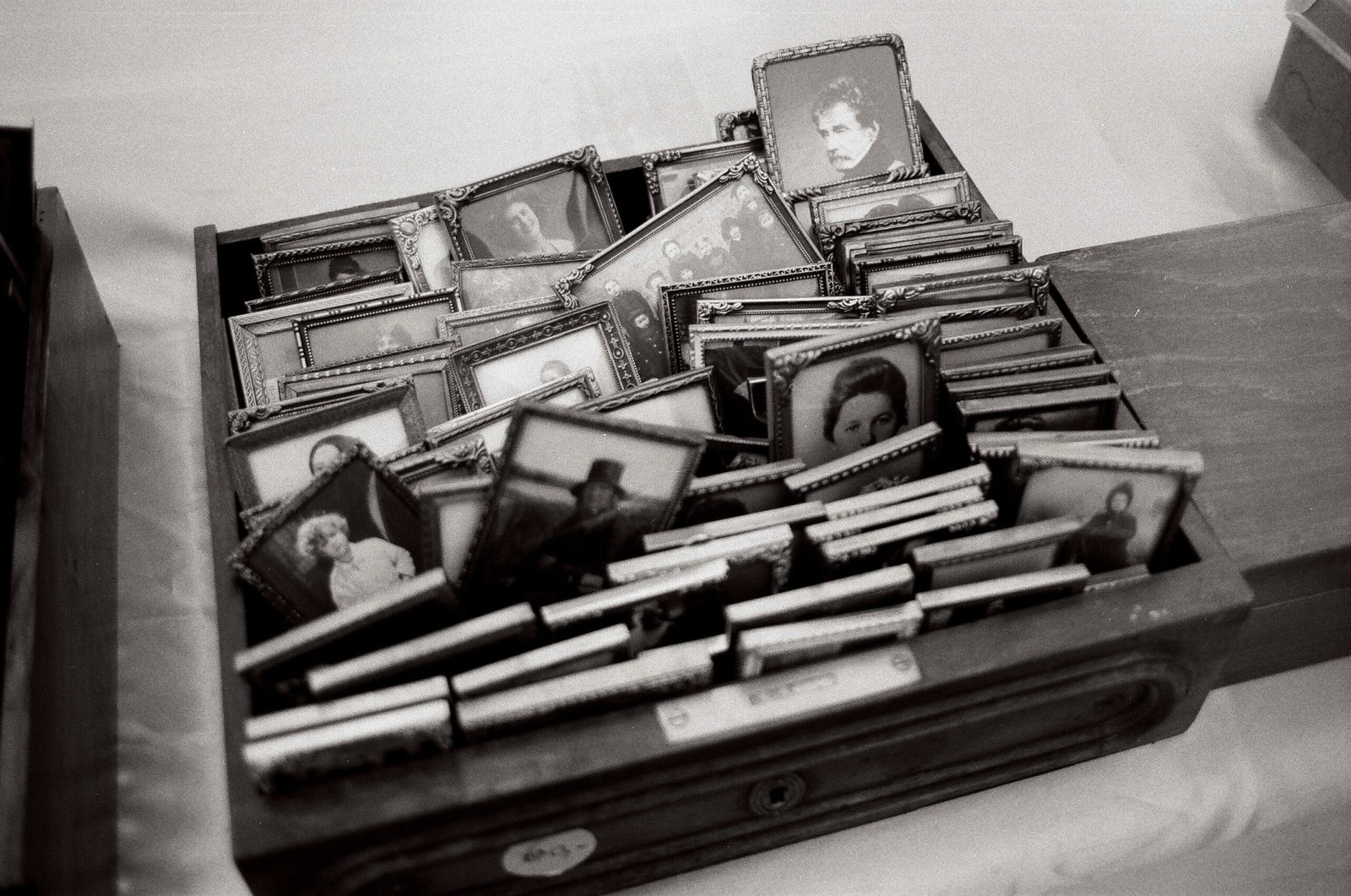
If you want to declutter sentimental items without regret, the most helpful thing AI can do is ask good questions one at a time, never tell you what to throw away.
Sentimental objects are different from ordinary clutter. A broken toaster is easy to let go of. A box of birthday cards, a grandparent’s tea set, a child’s artwork, or a jacket from a favorite year carry something that isn’t about the object at all.
That’s why the usual advice to “just be ruthless” may stall, and why a cleanup that was going well can suddenly stop at a single shoebox. The good news is that you don’t have to choose between keeping everything and feeling guilty. There’s a middle path, and a patient question-asker can help you find it.
This guide gives you a gentle method, a prompt that keeps AI in a supporting role, a way to keep the memory while freeing the space, and a few notes on when it makes sense to bring in another person.
Contents
Why These Items Feel So Hard
An object can stand in for a person, a time of life, or a version of yourself. Letting go of it can feel like letting go of that connection. Several things can be tangled together:
- Memory: “This reminds me of something I don’t want to forget.”
- Identity: “This is who I used to be, or who I hoped to be.”
- Obligation: “Someone gave this to me, so I should keep it.”
- Someday: “I might need it or use it later.”
- Loss: “This belonged to someone who is gone.”
In my view, naming which one is at work can make the decision clearer. A gift from a friend who would simply want you to be happy is a different question from the last thing a parent wrote by hand.
A Gentle Way to Decide
Three Ways to Make the Decision
- Emotional pace: Rapid sorting – Can feel rushed; Talking it through with someone – Supportive, but depends on someone’s time; Guided questions with AI – You set the pace.
- Risk: Rapid sorting – Regret over quick choices; Talking it through with someone – Opinions can pull you off course; Guided questions with AI – The tool must be told not to push.
- Best for: Rapid sorting – Everyday clutter; Talking it through with someone – Inherited or shared family items; Guided questions with AI – Items you want to think through privately.
All three are valid, and they work well together. A question-asker can help you think before you talk to family, for example.
A Prompt That Keeps AI in Its Place
Give the AI a clear role. This prompt makes it a listener, not a decision-maker:
I'm decluttering sentimental items, and I'd like your help thinking through one at a time. Please act as a gentle, patient question-asker.

Rules:
- Ask me ONE question at a time, and wait for my answer.
- Never tell me to get rid of something, and never pressure me. The decision is mine.
- Don't assume how I feel. If I seem unsure, ask what's making it hard.
- Don't offer psychological interpretations or diagnoses.
- After about 6 questions, summarize what I said in 3 to 4 plain sentences and offer 3 options I could consider (for example: keep it, keep a smaller piece or a photo, pass it on to someone, or set it aside to revisit). Do not recommend one.

The item is: [describe it in a sentence]
Treat this prompt as my suggestion: it is not taken from any official guide.
Because the AI never presses for a conclusion, you stay in charge. Answering questions out loud, or in writing, can bring clarity.
Questions That Open Things Up
If you’d rather think without AI, or want to add your own, these questions may be useful:
- What does this remind me of, and is the memory in the object or in me?
- If this were gone, what exactly would I miss?
- Would a photo, a written story, or a smaller piece hold the same feeling?
- Does this make me feel good when I see it, or guilty?
- Who would appreciate it more than I do?
- If someone gave it to me with a wish for my happiness, would they want me to keep it out of duty?
- Is it kept somewhere I can enjoy it, or is it in a box I never open?
An item you love and display can stay forever. An item packed away that you only feel guilty about is a different case.
Keep the Memory, Free the Space
Letting go of the object doesn’t have to mean letting go of what it meant. Here are ways to preserve the memory in a smaller form:
- A photo with a story. Take a good photo of the item, then write a few lines: where it came from, who it belonged to, why it mattered. AI can help tidy your words if you give it the facts, but the story should be yours.
- A story card. A small card or note page kept in a memory box, with the item’s photo and a short caption.
- A smaller keepsake. Keep one teacup instead of the entire set, a swatch of fabric instead of the whole garment, or a single page instead of the whole stack.
- A digital archive. Scan letters, artwork, and photos. Keep the originals that matter most and store the rest as files in cloud storage.
- A display, not a box. If something is worth keeping, make a place for it where you’ll see it.
Here’s a simple template for a story card:
Item:
From:
Date or era:
What it was used for:
Why it matters to me:
Who I'd like to remember it with:
You can paste your answers into AI and ask it to turn them into a short, warm paragraph using only what you wrote. Then read it over and edit it until it sounds like you.
A “Not Yet” Box With a Date
Some items need time. Instead of forcing a decision, give them a gentle holding place.
- Put the item in a clearly labeled box marked “Not yet.”
- Write a review date on the box, such as six months ahead.
- Put the date on your calendar.
- When the date comes, look at the item again and ask the questions above.
If you haven’t missed it or thought about it, that tells you something. If you have, you can bring it out and give it a proper home. Either way, the pressure is off, and you’re making a decision with more information than you had before.
Set a Limit That Feels Right
A memory box with a size limit can make choices easier, because you’re choosing the best examples rather than deciding yes or no on each item.
- One box per person for children’s artwork and school items, with the favorites kept and photos taken of the rest
- One box for each major category, such as letters, travel, or family items
- A shelf or a corner for display items, so they stay visible
When the box is full, you compare new items to what’s already inside and decide what stays. The boundary isn’t a rule about what you should keep. It’s a way to make sure that what you keep is what you truly value.
Inherited and Shared Items
Things that belonged to a relative who has died, or that are shared among family members, carry extra weight. A few ideas:
- Don’t rush. If you can, wait until you feel ready.
- Ask other family members whether anyone wants specific items. A teacup you don’t need might be treasured by a cousin.
- Share the stories along with the objects, so each person who receives something knows why it mattered.
- Photograph everything before it goes, so the whole collection is recorded.
- Keep a few things that feel truly representative, rather than trying to keep all or nothing.
If the situation involves legal documents, valuables, or an estate, a professional can help with the practical parts.
When It Helps to Bring in Another Person
Some people find that even small decisions bring up strong feelings, or that the volume of belongings is affecting their daily safety or well-being. If that sounds familiar, talking to a trusted friend, a professional organizer, or a mental health professional can be a kind and practical step. AI can organize your thoughts, but it isn’t a substitute for human support or professional care.
A Sample Session
Here’s how a short conversation might go, using a made-up item:
You: “A wooden music box from my aunt.”
AI: “What do you remember about receiving it?”
You: “She gave it to me when I was ten. It plays a song she used to hum.”
AI: “How do you feel when you hear it now?”
You: “Warm, but I haven’t opened it in years. It’s in a box in the closet.”
After a few more questions, the AI summarizes what you said and lists options: keep it and put it somewhere you’ll hear it, record the song and keep a photo, or pass it to a family member who knew your aunt. You choose. Maybe the music box goes on a shelf. Maybe you record the tune and let the box go to a cousin. Both are good outcomes.
Questions About Decluttering Sentimental Items
Is it normal to find it hard to declutter sentimental items? Yes. Sentimental objects hold memories and relationships, so hesitating is understandable and doesn’t mean you’re doing anything wrong. Going slowly, using photos and story cards, and giving yourself a “not yet” box are all ways to make it gentler.
Will AI tell me what to throw away? Not if you give it the prompt above. It’s designed to ask questions and offer options, not to decide.
Is it okay to keep things I never use? Yes, if they matter to you. The goal is to keep what you value, not to hit a number.
What if someone gave me something and I feel guilty? One view is that the gift’s purpose was served when you received it. Keeping a photo and a thank-you in memory can honor the giver without keeping the object.
How many items should I tackle in one sitting? A handful. Short sessions are easier on you than a marathon.
What if I regret giving something away? That can happen. A photo, a story card, and a not-yet box may reduce the chance, since you’ve kept the part that mattered most.
Start With One Small Thing
Choose one item that’s been sitting in a box, describe it in a sentence, and answer a few of the questions above. When you declutter sentimental items at your own pace, with a question-asker instead of a critic, you get to decide what stays, what changes form, and what moves on, and the memories stay with you either way.
This article offers general organizing ideas and isn’t a substitute for professional mental health care. If decluttering feels overwhelming or distressing, consider talking to a qualified professional.
Sources:
Leave a Reply